
- This event has passed.
Maha Shivaratri
Maha Shivaratri literally means ‘the great night of Lord Shiva‘ and is celebrated once a year in February or March, just before the new moon. This special night is celebrated in honor of Shiva, Lord of the universe.
It begins with the Shiva Lingam Abhishek Puja; this is a ceremonial prayer in honor of Lord Shiva. According to tradition, it is beneficial to stay awake this night and spend it in meditation or singing bhajans and kirtan. This night is suitable for spiritual growth and meditation. A night that has a healing effect on body, soul, and spirit.
The Program
6:30 AM: Havan in the dhuni
8:00 AM: Aarti followed by Paduka Puja in the temple
10:30 AM: Karma Yoga and preparation for the evening celebration
1:00 PM: Simple lunch – on this spiritual day, eating only fruits and nuts or complete fasting is recommended
until 4:00 PM: Break
4:00 PM – 6:00 PM: Karma Yoga
7:00 PM: Aarti in the temple
9:00 PM: Maha Shivaratri Shiva Lingam Abhishek Puja* in the temple
Followed by bhajans and kirtan singing until early morning
*
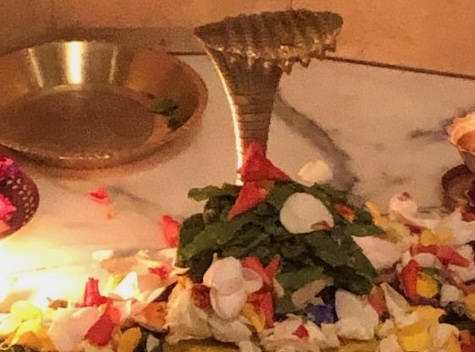
Shiva Lingam Abishek Puja: the Shiva Lingam is the symbol of Shiva, who is without beginning or end. This puja is held to celebrate our connection with the infinite essence of existence, for peace and harmony. During this Abishek puja, the Lingam is bathed with milk, and offerings of perfume oil, flowers, incense, and sweets are made, and finally, light is offered through the Aarti. All of this serves as a deep cleansing and meditation, giving us new energy and enlivening our consciousness.
The next morning, there is a program as usual (see daily program).
The Origin of Maha Shivaratri
There are different stories about this celebration. One of the stories is about the churning of the ocean in the early days of creation to find the nectar of immortality. Before the pot with the nectar surfaced, a pot of poison emerged that could destroy the world and frightened both gods and demons. To protect the world, Shiva came and drank the poison, which he did not swallow but held in his throat, turning it blue. This is why Shiva is also called ‘Neelkantha’: ‘He with the blue throat’. Maha Shivaratri is celebrated to commemorate this event.

